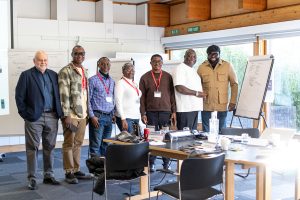
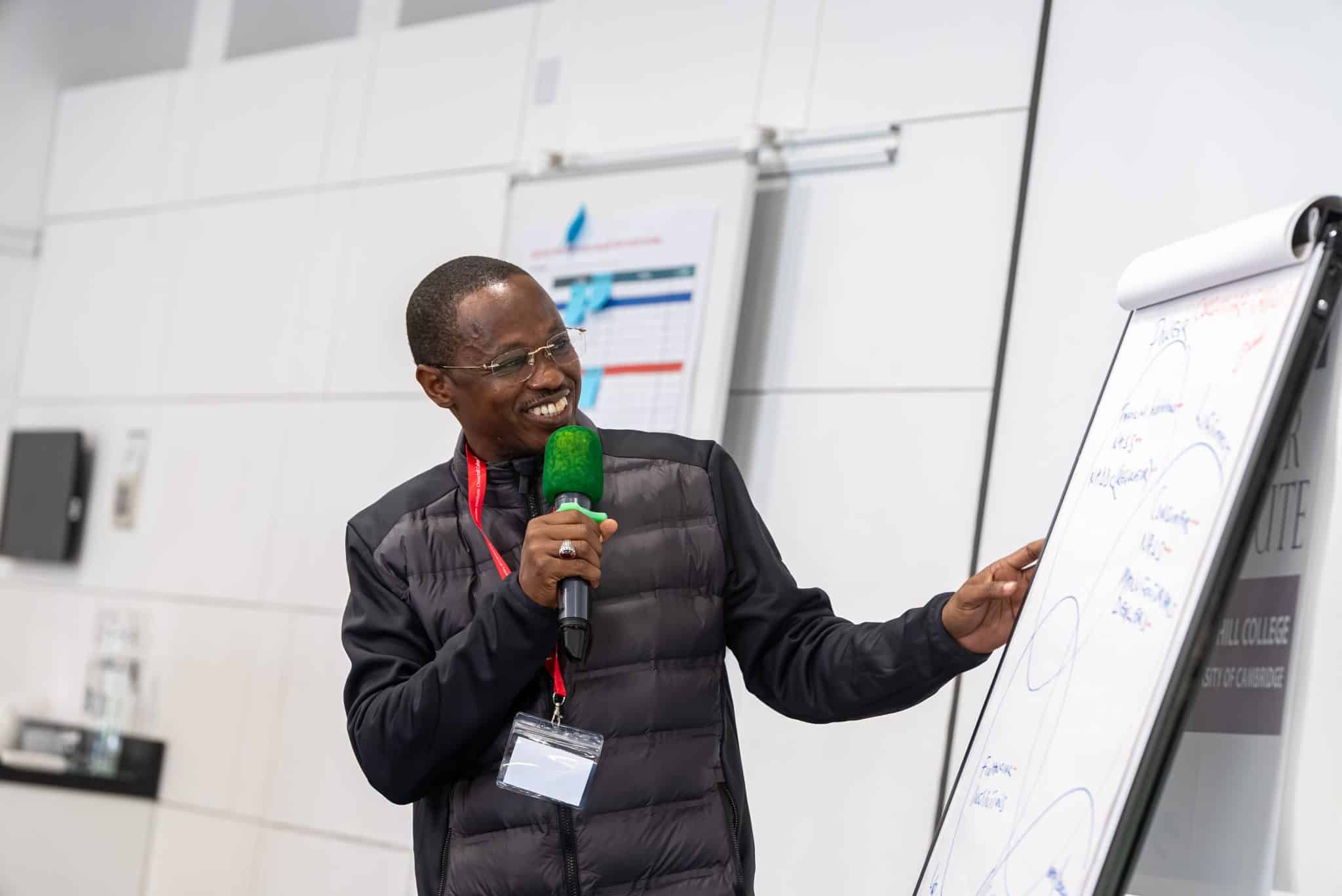
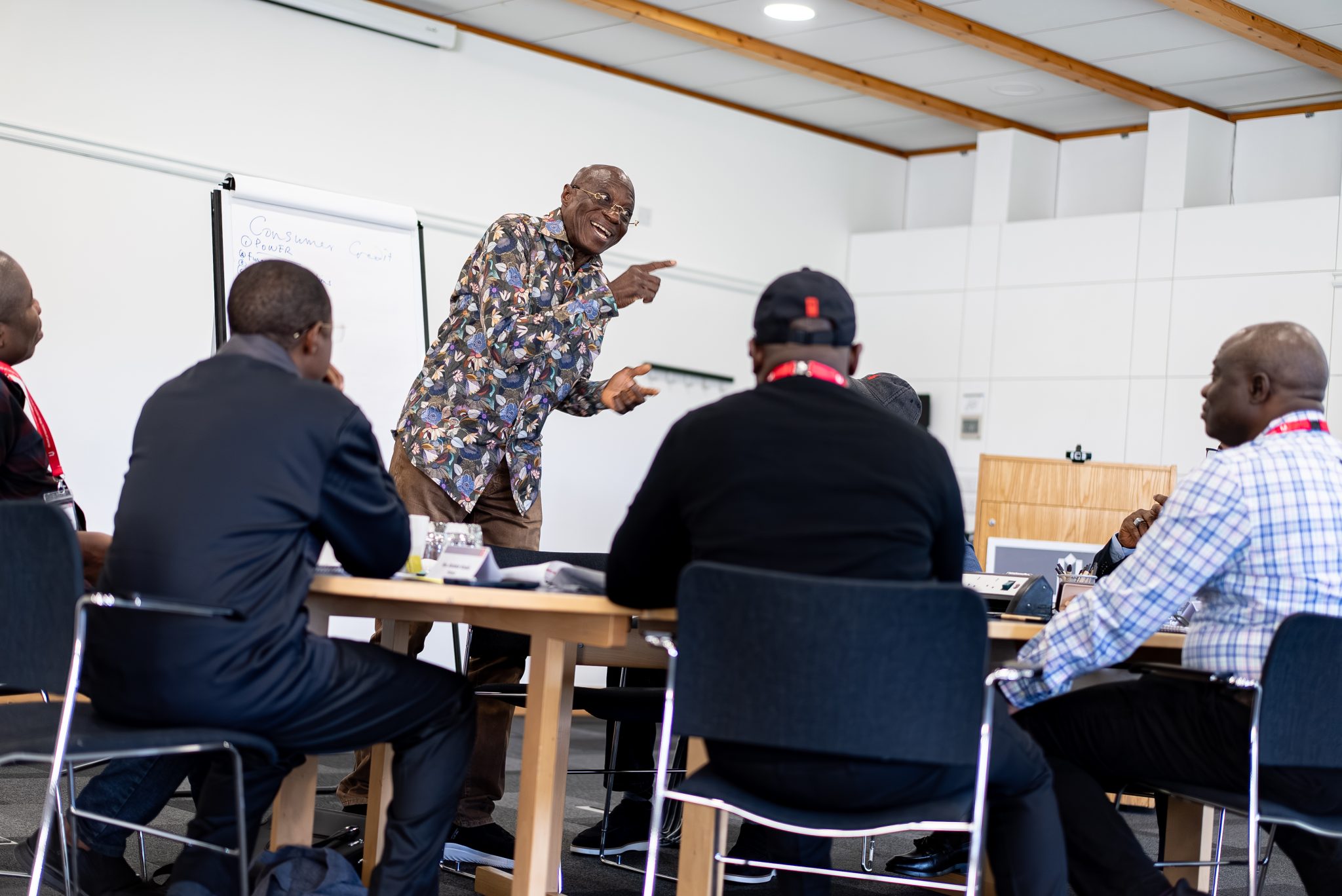
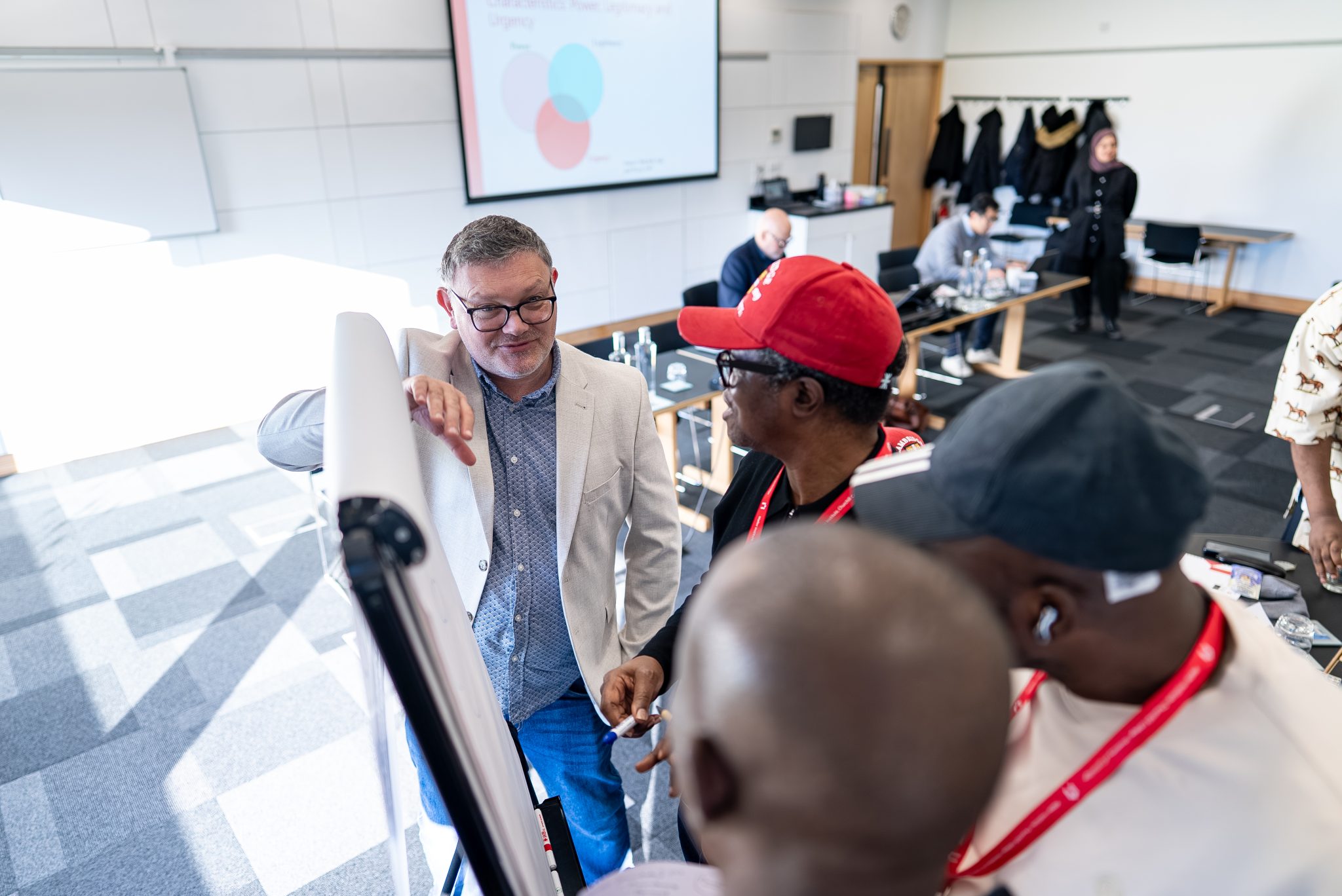
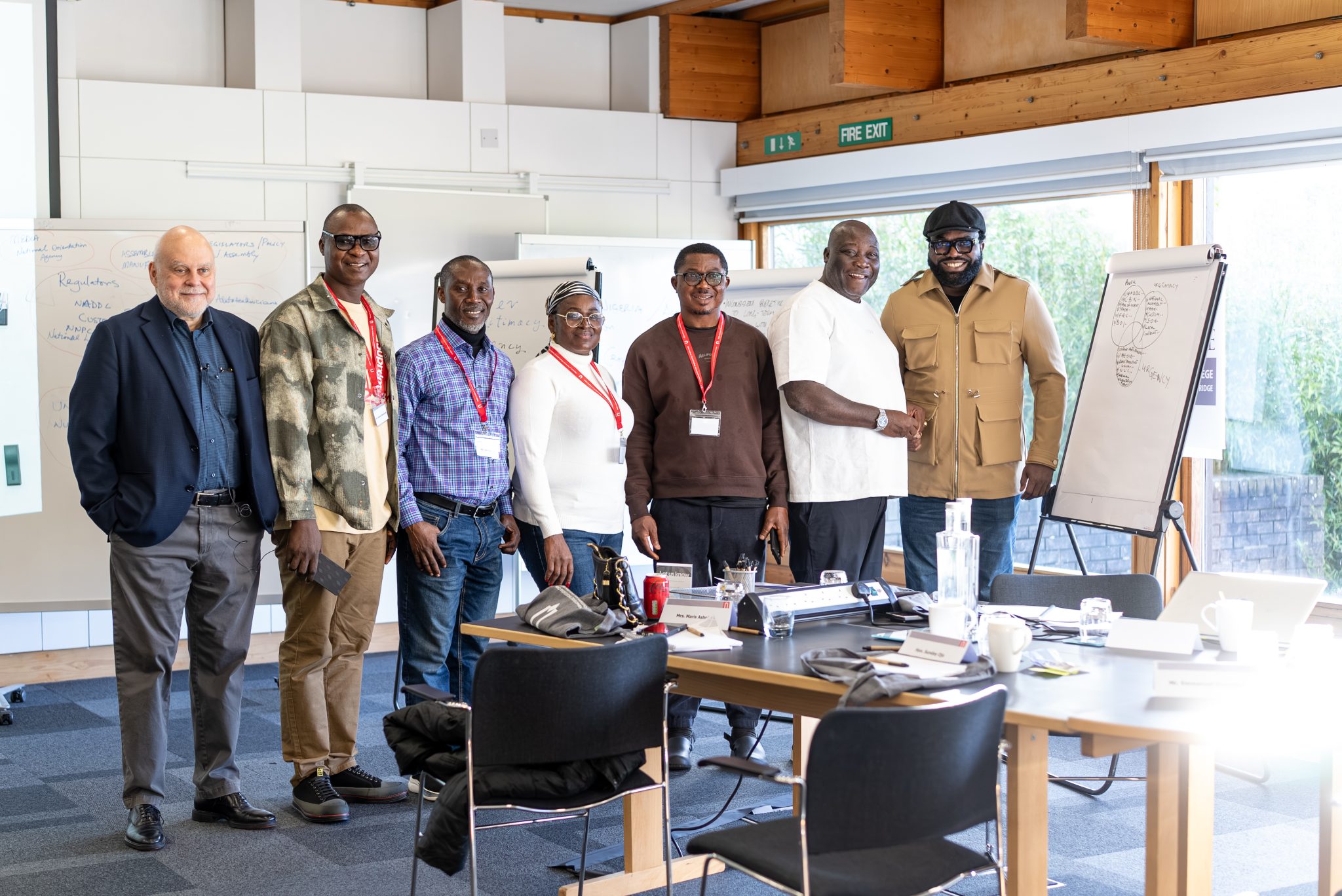
Delivered in Cambridge over four days, the programme blended expert input, practical application and peer learning in a highly interactive format.
Participants engaged in a range of learning approaches, including simulations, case studies, facilitated discussions and group exercises, creating space to reflect on leadership challenges while applying new tools in real time.
Key sessions and speakers included:
- Leadership in action – an immersive simulation led by Richard Hill, designed to surface real-world leadership behaviours and establish a shared foundation for the programme
- Industrial innovation policy and ecosystems – delivered by Dr Carlos López-Gómez and Dr Mateus Labrunie from the Institute for Manufacturing, the session included a group exercise where participants mapped Nigeria’s innovation system and identified critical actors, relationships and capability gaps
- International case studies – exploring how countries such as China and Korea have built competitive automotive industries
- Stakeholder management and negotiation – led by Dr Stelios Zyglidopoulos, focused on building consensus and enabling collective action
- Governing effectively: oversight and decision-making in practice – led by Dr John Barker, providing practical frameworks for strengthening accountability, scrutiny and institutional collaboration
The programme concluded with a UK–Nigeria collaboration panel, bringing together industry and policy leaders to explore how international partnerships can support delivery of Nigeria’s automotive ambitions. The panel featured Paul Arkwright (Former British High Commissioner to Nigeria), Matt Smith (Head of International, Society of Motor Manufacturers and Traders (SMMT)), and Oluwemimo Joseph Osanipin (Head of National Automotive Design and Development Council (NADDC)).
Throughout, the emphasis was on translating insight into action—ensuring participants could apply learning directly to their roles and institutional priorities.