


The transition and development from clinician to healthcare executive represents a profound shift in perspective, responsibility, and social impact. As a consultant gynaecologist who moved into leadership roles, including Medical Director and CEO of Hinchingbrooke Hospital, founder of Circle Harmony in China, and currently Global Medical Director for IHG and Co-founder/CEO of IHG Mental Health Limited, my journey reflects an ongoing effort to translate clinical expertise into strategic leadership within an evolving healthcare landscape.
“While experiential learning is invaluable, structured knowledge in management and organisational behavior provides a stronger foundation for complex decision-making.”
From Clinician to Leader
Moving from direct patient care into executive leadership requires more than seniority – it demands a new mindset. Early in my transition, I had to expand my focus from individual patient outcomes to system-wide performance. This meant developing competencies in finance, governance, human resources, and strategy – areas largely absent from traditional clinical training.
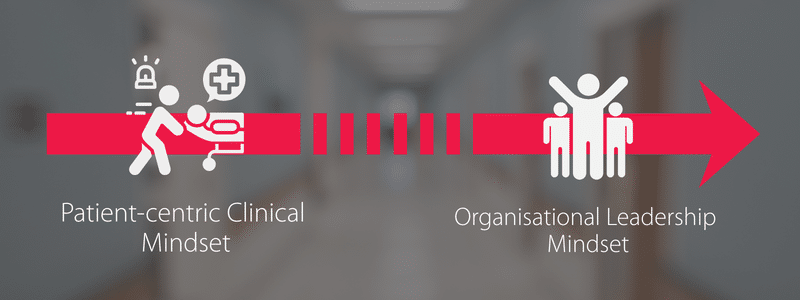
To better support clinicians transitioning into leadership, three elements are critical. First, structured mentorship programs pairing clinicians with experienced executives. Second, early exposure to management responsibilities at departmental level. Third, formal leadership development programs focused on business acumen, change management, and communication. These help bridge the gap between a patient-centric clinical mindset and the broader responsibilities of organisational leadership.
Success in medical leadership should not be measured solely through financial performance. Equally important are improvements in patient safety, staff engagement, retention, reduction in clinical errors, and patient satisfaction. A leader’s ability to foster a culture of continuous learning, innovation, and evidence-based practice is a key indicator of long-term success.
However, the transition is not without challenges. In healthcare executive development, clinicians often face skepticism about their leadership capabilities, emotional difficulty stepping away from patient care, and the complexity of navigating financial and political pressures. Perhaps the most persistent tension lies in balancing the clinical imperative to provide optimal care with the reality of finite resources. Achieving this balance requires both discipline and perspective.
Clinicians as Leaders: Strengths and Risks
Clinicians bring distinct advantages to leadership roles. They offer credibility among peers, deep understanding of clinical workflows, and a strong patient-centered perspective. These qualities enable more informed decision-making and stronger engagement with frontline teams.
However, there are potential drawbacks. Clinician leaders may struggle with difficult financial decisions or risk over-prioritising clinical ideals without sufficient regard for sustainability. Conversely, there is also a risk of overcorrecting toward financial performance at the expense of patient care. Effective leadership lies in maintaining equilibrium between these competing demands.
Reflecting on my own journey, earlier exposure to formal business and leadership education would have accelerated my development. While experiential learning is invaluable, structured knowledge in management and organisational behavior provides a stronger foundation for complex decision-making and executive development in healthcare.
Innovation and Digital Transformation
Innovation is central to healthcare progress, particularly through digital technology. My experience supporting health tech startups in areas such as digital health, genomics, and medical education has shown that success depends less on the technology itself and more on how it is applied.
Successful integration requires a clear understanding of the problem, user-centered design, and strong implementation strategies. Technology introduced without alignment to real clinical needs rarely delivers value. Equally important is change management – ensuring that staff are engaged, trained, and supported throughout the process.
Leadership plays a critical role here. Leaders must champion innovation, allocate resources, and create a culture that embraces experimentation. They must also manage resistance and communicate the value of change effectively. My work with IHG Mental Health Limited highlights how leadership can enable meaningful adoption of technology in redefining care delivery.
Digital tools also enhance workforce development. E-learning platforms, simulation technologies, AI-supported diagnostics, and telemedicine enable flexible, accessible, and continuous learning. These tools not only improve skills but also support collaboration across geographical boundaries.
Advances in artificial intelligence, machine learning, and genomics are transforming healthcare delivery. AI supports early diagnosis, optimises treatment planning, and reduces administrative burden. Genomics enables personalised medicine tailored to individual patients. These developments contribute to improved outcomes, greater efficiency, and reduced costs.
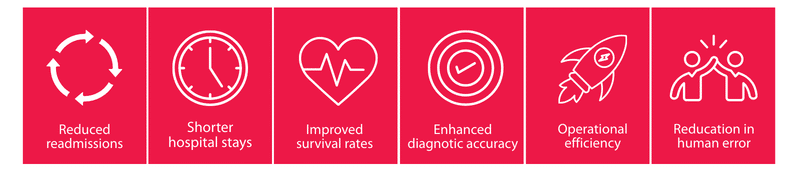
Measurable benefits include reduced readmissions, shorter hospital stays, improved survival rates, and enhanced diagnostic accuracy. Equally important are improvements in operational efficiency and reductions in human error.
Global Healthcare Perspectives
Working across healthcare systems in the UK, China, and globally has provided valuable insights into different models of care. Publicly funded systems prioritise equity and access but often face challenges related to efficiency and innovation. Market-driven systems can foster rapid development and responsiveness but may create disparities in access and quality.
Variations in healthcare outcomes are often linked to socioeconomic factors, infrastructure, and investment in preventive care. Metrics such as life expectancy, disease prevalence, and access to specialised services highlight these differences.
No system is without flaws. Each must continuously adapt to address challenges related to funding, quality, and equity. Leadership styles also vary: public sector leaders often navigate political environments, while private sector leaders focus on competitiveness and performance. Regardless of context, effective leaders are those who inspire trust, drive change, and remain committed to patient well-being.
The global health agenda, particularly the focus on equity, sustainability, and system resilience, aligns closely with these observations. Mental health, in particular, is increasingly recognised as a critical component of overall health and system stability. Addressing it requires integrated, innovative, and collaborative approaches.
Conclusion
The evolution from clinician to leader, the drive for innovation, and the understanding of global healthcare systems are essential components of modern healthcare leadership. My experience has reinforced that effective healthcare executive development and leadership requires a combination of clinical insight, strategic thinking, and adaptability.
While the challenges are significant, so too are the opportunities. By aligning clinical expertise with strong leadership and innovation, we can build more effective, equitable, and sustainable healthcare systems for the future.